Minecraft 26.3 'Wilderness Bound': Dappled Forests, Cushions, and a Rendering Overhaul
Key Points
- A new Dappled Forest biome brings Poplar trees, Shelf Mushrooms, and a camping aesthetic with Abandoned Camp structures scattered across seventeen different biomes.
- Cushions and Straw Beds are new, but the Straw Bed is a one-time-use item that gets destroyed after you sleep in it, so stock up if you're using them as a quick night-skip.
- Realm owners can now generate up to five invite codes per Realm instead of relying on the old "add friend" system, which should make running a semi-public Realm a lot less annoying.
- Mojang replaced the "Improved Transparency" rendering system with a genuine order-independent transparency algorithm, and it comes with an honest warning that it'll cost more performance than before.
- Minecraft has moved from GLFW to SDL3 for windowing and input, which is a bigger technical shift than it sounds and could cause short-term hiccups for some PC configurations.
- Server operators should know that the
white-listproperty now defaults totrue, and sign click events no longer execute automatically unless explicitly allowed. - Data pack authors are looking at substantial breaking changes this patch: loot tables, predicates, and villager trades all got restructured to support tag references and inline values more consistently.
Mojang just shipped Java Edition 26.3, nicknamed Wilderness Bound. On the surface it's a camping-flavored content drop: new trees, a new biome, cushions you can sit on, beds you sleep on once and lose forever. Dig into the patch notes, though, and there's a lot more going on. This update swaps out Minecraft's windowing library, rewrites how translucent objects render, and makes a pile of changes that server admins and data pack authors need to actually read before they update.
The new content: camping, but make it Minecraft
The headline feature is the Dappled Forest, a cold-adjacent biome that generates Poplar Trees in three leaf colors (red, orange, yellow), each with their own falling leaf particles. Shelf Mushrooms grow directly on the trunks and have a bouncy quality similar to beds when you step on them, which is a weirdly specific detail but a fun one.
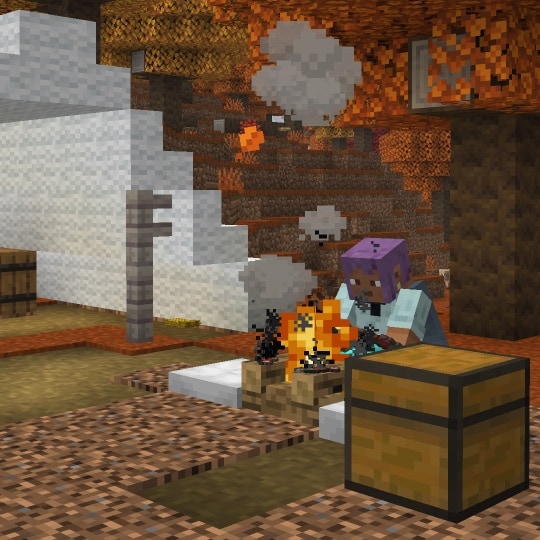
Abandoned Camps are the real structural addition here. They generate in seventeen different biomes, from Meadows to Savannas to the Pale Garden, each with its own visual variant built around the surrounding environment. Find one and you'll get loot-filled chests and barrels, plus a shot at new Explorer Maps that point toward other camps or classic structures like Ancient Cities and Woodland Mansions.
Cushions are the more immediately useful addition for builders. They come in all 16 dye colors, place on any flat surface, and let players actually sit down. No collision, can't be pushed by pistons, break if you pull the block out from under them. Straw Beds fill a different niche: they skip the night without setting your spawn point, which has been a requested feature for ages, but they're consumed after a single use. Craft three Hay Bales and you get four of them, so budget accordingly if your server does group sleeping events.
Realms gets actual invite management
Realm owners have been stuck with a clunky friends-list system for years. That changes here: each Realm can now have up to five invite codes, each one toggleable and optionally set to expire. There's also a new "Join Realm" screen for entering codes directly, plus render distance and simulation distance sliders added to the Realm configuration menu.
It's a small quality-of-life shift, but it matters for anyone running a Realm for a loose group of friends or a small community that doesn't want to manage a Microsoft friends list just to let people in.
The rendering rewrite nobody asked for, but everyone will notice
This is the part of the update that's easy to skim past in the patch notes but actually changes how the game looks and runs. Mojang replaced the old "Improved Transparency" video setting with a real order-independent transparency algorithm (OIT). Previously, fixing visual bugs with translucent objects meant rendering different layers to separate textures and combining them, which caused its own weird artifacts, like objects disappearing behind stained glass or water.
OIT renders translucent objects without needing to sort them first, which fixes a long list of ugly transparency bugs that have existed since forever. The catch, stated plainly by Mojang:
We expect OIT to have a higher performance impact than the previous implementation of "Improved Transparency".
So if players were already running Improved Transparency for the visual fixes, don't expect this version to run faster. It should look notably better though, and the developers gave a shoutout to modders Rubén Osorio López and Jozufozu for sharing research that helped make it happen, which is a nice bit of transparency about where the tech actually came from.
Alongside that, Minecraft has fully switched from GLFW to SDL3 for window management and input handling. This is the kind of change that's invisible when it works and infuriating when it doesn't. Keybinds now use physical key positions instead of layout-specific codes, Borderless Fullscreen is the new default, and Linux users get native Wayland support. These are good changes overall, but any time a game swaps out its entire input backend there's a real chance some hardware or driver combination throws a tantrum for a patch or two.
What server owners actually need to pay attention to
A few changes here directly affect how servers behave out of the box:
- The
white-listserver property now defaults totrue. If you're spinning up a fresh server and expecting it to be open by default, it won't be anymore. Check your server.properties. - Signs no longer execute embedded commands or click events by default. There's a new
allow_op_featuresfield to restore the old behavior, but any datapack or map that relied on clickable sign commands needs updating. - Some server-side log lines that monitoring tools used to parse have been removed in favor of the Minecraft Server Management Protocol. If your server software scrapes console output for events, this is worth testing before you push the update live.
- Potion brewing and cooking recipes are now fully data-driven, meaning custom brewing stations and furnace behaviors are far more moddable than before without touching core game code.
None of these are catastrophic, but they're the type of thing that breaks a plugin or automation script silently if nobody reads the notes first.
The data pack minefield
This update carries a genuinely large number of breaking changes for data pack and resource pack authors. Loot table conditions were renamed from conditions to condition. Predicates use type instead of condition now. Number providers got split into separate integer and float registries. Villager trades require inline values for several fields that used to accept tag references.
None of this affects a vanilla survival server day to day, but if a community runs custom loot tables, custom advancements, or heavily modified villager trades, expect to spend some time fixing red squiggly lines in your data pack files. Mojang's own developer note on the floating-point precision change in world generation is a good example of how deep these changes go:
We are aware that the details of floating point rounding have been used in some Data Packs, and this change may affect specific configurations. We have introduced alternatives for the use-cases that we are aware of, but please do share with us on feedback.minecraft.net if you encounter use-cases that are no longer possible to support.
That's a refreshingly honest way to phrase "we might have broken your thing, let us know."
Bug fixes worth flagging
The fix list runs well over a hundred entries, most of them small. A few stand out for actually changing gameplay feel:
- Endermen and Shulkers can no longer teleport onto Bedrock, signs, or the Nether roof, closing off some long-standing exploit and griefing spots.
- Spectators can finally use Nether portals, End portals, and End gateways to teleport, which has been broken since forever and made spectator-mode server tours genuinely annoying.
- Villagers now level up properly even if a player exits the world or closes the trade window immediately after filling their experience bar. This was a surprisingly persistent bug that messed with trading-hall efficiency.
- A handful of serious performance regressions tied to the Vulkan rendering backend on AMD and Intel Arc GPUs got patched, which should help players who'd been stuck lowering settings for no good reason.
The full list is on Mojang's official patch notes page if you want to comb through everything, including the dozens of string capitalization and typo fixes nobody but the Mojang localization team will ever notice.
So, worth updating right away?
For players, yes, pretty much immediately. The new biome and structures are fun, Cushions are a genuinely good furniture addition, and the bug fixes around Endermen and spectator mode alone are worth the download. The rendering changes might cost a few frames if OIT gets enabled, but the visual improvements are real.
For server owners, it's worth testing in a staging environment first. Check your server.properties for the whitelist default, confirm your plugins and data packs still parse correctly against the new loot table and predicate formats, and make sure any console-scraping tools you rely on didn't just lose their data source. This isn't a patch you want to blind-push to a production server with forty people on it at 9pm on a Friday.
", "tags